


Perfume Lens
4.110.00 Reviews
App Specs
- Version
- 1.0.6
- Updated On
- License
- Free
- Downloads
- 10,000+
- Developer
- Perfume Lens
- Categories
- Lifestyle
- Platform
- Android
Screenshots
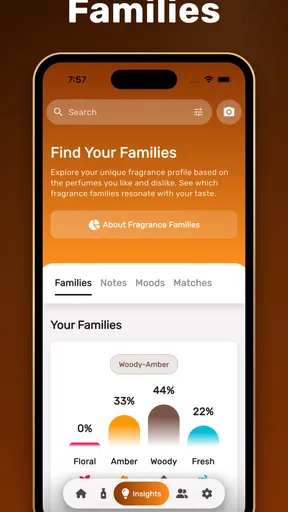
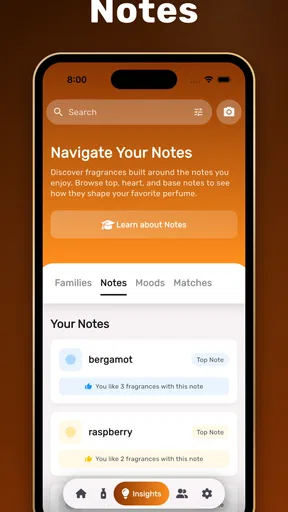
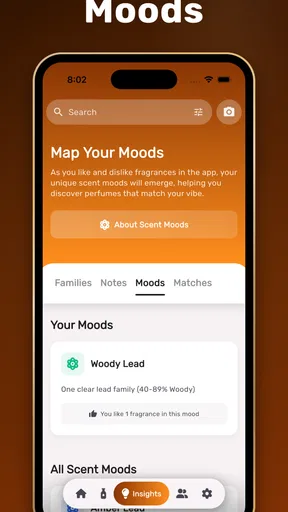
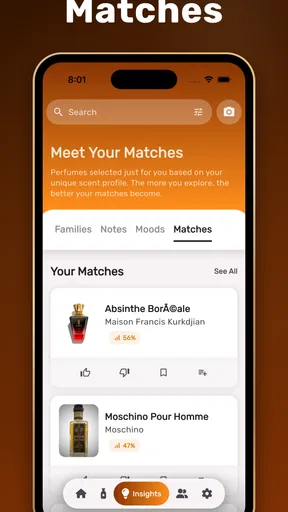
 Analysis by AppCompare
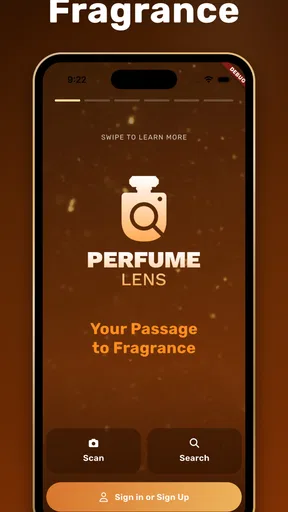
I approached Perfume Lens as a practical companion for people who want to remember, compare, and understand the scents they encounter, rather than as a simple catalog of fragrance names. Its central idea is straightforward: you snap a perfume, collect the scents that interest you, and use those choices to shape a personal Scent Match Profile. That focus makes it feel more useful than a basic notes app when I am trying to make sense of several fragrances at once.
The app comes from Perfume Lens and sits in the lifestyle category. It is free, aimed at everyone, and currently available in version 1.0.6 for devices running Android 7.0 or later. The public response is encouraging but still relatively small, with an average of 4.2 from around 33 ratings and over 10K installs. I see that as a sign of early interest rather than a guarantee that every perfume enthusiast will find it complete.
Building a personal scent profile instead of relying on memory
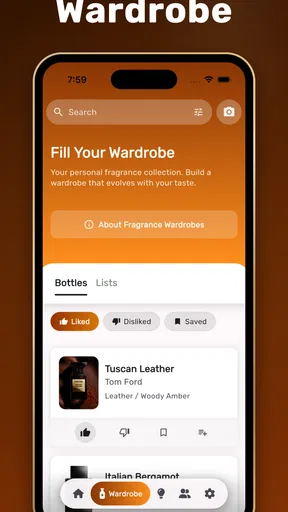
The most interesting capability here is the Scent Match Profile. In everyday use, that changes the purpose of the app. I am not merely saving a bottle to look at later; I am creating a record of the fragrances that catch my attention. Over time, that collection can become a more useful reflection of my taste than a vague statement such as “I like fresh perfumes” or “I prefer something warm.”
That distinction matters because fragrance shopping is unusually dependent on memory. A bottle may look familiar, but the experience of smelling it in a store can disappear quickly once I leave. By capturing it when it has my attention, I can keep the discovery connected to the moment. The profile then gives the collection a direction, helping me think about patterns in what I save instead of treating every perfume as an isolated choice.
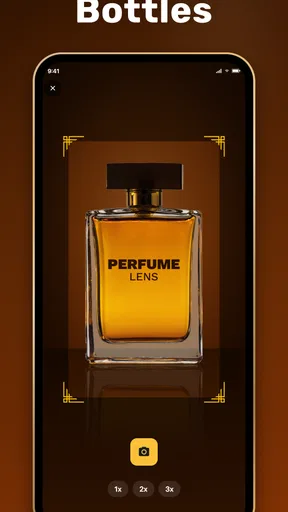
I found the camera-led approach especially appealing for browsing in person. A name typed into a notes app can be misspelled, forgotten, or separated from the bottle that inspired it. A snap is faster and more natural when I am standing at a counter or looking through a friend’s shelf. It also lowers the effort required to record a scent immediately, which is important because a collection tool only works if I actually use it.
The real strength is the reduction of fragrance-memory friction. Perfume Lens gives the act of collecting a clear starting point: see a bottle, capture it, and keep it connected to my developing preferences. That is more focused than trying to reconstruct my taste later from scattered notes, screenshots, and half-remembered names.
What the camera-first workflow changes
In practice, the camera is not just a decorative shortcut. It encourages a different habit. Instead of waiting until I get home to research a perfume, I can record it while the discovery is fresh. That makes the app suitable for a department-store visit, a fragrance counter, a market, or even a conversation where someone recommends a bottle I have never noticed before.
Worth Reading Before You Choose

EA SPORTS FC Mobile 26 Is a Bigger Football Game, but It Takes Time

Flipboard Shows What News Apps Must Do Beyond the Feed

Switching to Android Auto Means Rethinking Your Driving Routine

Google Calendar Makes a Crowded Week Easier to Manage

Ludo King Makes the Most of the Minutes Between Plans

Baby Panda World Brings Quick Play to Modern Phones, but Its Game Library Feels Busy
My preferred workflow would be to capture a perfume before smelling it, then use the collection as a reminder after testing it. That small separation is useful: the image preserves what I encountered, while my later reaction can remain honest rather than being influenced by whether I remember liking the packaging. If I am comparing several options, I can also use the saved items as a visual shortlist instead of repeatedly asking myself which bottle was which.
There is a subtle trade-off in this approach. A photograph can identify the object I saw, but it cannot replace my own experience of the fragrance. Perfume changes on skin, develops over time, and can smell different from one person to another. I would therefore treat the profile as a record of interest and preference, not as a laboratory result or a substitute for testing.
This is also why I would avoid saving every bottle indiscriminately. A smaller collection built around scents I genuinely noticed will make the profile more meaningful than a large pile of random captures. A useful routine is to save a perfume when I would realistically consider smelling it again, buying it, or recommending it. That turns the app into a decision aid instead of a visual archive with no personal value.
A realistic shopping scenario
Imagine I have ten minutes before meeting a friend and walk past a fragrance counter. Several bottles catch my eye, but I know I will not remember their names later. With Perfume Lens, I can snap the ones that interest me, test a couple on paper or skin, and leave with a compact record of the visit. Later, when I am ready to explore perfumes more carefully, the collection gives me a starting point based on what actually attracted me in the first place.
The same workflow works when I am shopping for a gift. I can collect possibilities during separate visits rather than trying to make a rushed decision. The profile may help me notice whether I keep choosing similar kinds of scents, while the saved images make it easier to discuss options with the recipient. I would still ask about their preferences and test where possible, but the app can organize the discovery stage without turning it into a spreadsheet exercise.
Another useful case is sharing a scent trail with a friend. If someone recommends a perfume during a conversation, capturing it immediately prevents the common “I will remember that later” problem. When several recommendations accumulate, the profile offers a personal place to revisit them. That is particularly handy for people who enjoy exploring fragrance as a hobby but do not want to maintain detailed written records.
Where it is more helpful than ordinary alternatives
The usual alternative is a phone note containing perfume names, quick opinions, and perhaps a few screenshots. That method can work, but it depends on consistent typing and organization. Perfume Lens makes the initial capture more visual and immediate, which suits the way people often discover fragrance: by seeing a bottle first and asking questions afterward.
A general photo gallery is another substitute, but it lacks the intentional connection to a Scent Match Profile. A gallery can preserve images, yet it does not naturally communicate why I saved them or how they relate to my broader taste. On the other hand, a detailed fragrance database may be better for someone who wants extensive technical information, ingredient research, or a large community-driven reference library. Perfume Lens is more appealing when the priority is personal discovery rather than exhaustive documentation.
I would also distinguish it from a shopping list. A shopping list is built around purchases I have already decided to make. This app is better earlier in the process, when I am collecting possibilities and trying to understand my preferences. That makes it useful for browsing, but less suitable as the only tool for tracking prices, stock, sizes, or a final buying plan.
Small habits that make the profile more useful
My first tip is to capture before deciding. If I only save perfumes I already love, the profile will confirm my existing taste but teach me little. Recording a few “maybe” scents creates a broader picture and may reveal that I am drawn to a style I had never named for myself.
My second tip is to use the collection as a cooling-off tool. Fragrance counters can encourage quick purchases, especially when several scents seem appealing in the moment. Saving a bottle and leaving it in the profile lets me return to the idea later. If I still care about it after the initial excitement has passed, it deserves more attention; if not, I have avoided buying purely from impulse.
My third tip is to separate visual attraction from scent preference. I may love a bottle’s design but dislike the fragrance, or ignore a plain-looking bottle and discover that its scent suits me perfectly. Capturing both kinds of item can make the profile more honest. It prevents the collection from becoming only a record of attractive packaging.
A fourth useful habit is to review the profile before a shopping trip. Rather than entering a store with no plan, I can use the saved scents to focus my questions and avoid repeating the same exploration. This is where the app’s personal angle becomes more valuable than a generic list: it starts with my own trail of interest.
Limitations I noticed in the concept
The camera-first design is convenient, but it also creates expectations that need to be kept realistic. A captured bottle is not the same as a complete evaluation. If I need precise note breakdowns, longevity comparisons, concentration details, or expert commentary, I would still look elsewhere. The app’s appeal lies in organizing my relationship with scents, not replacing every other fragrance resource.
The profile is also only as useful as the collection I build. If I save items casually and never revisit them, the personal matching idea loses its value. This is not a criticism unique to the app’s execution; it is the main trade-off of any preference-based tool. The benefit grows gradually, so someone seeking an instant recommendation may find the experience less satisfying than a conventional search service.
There is another practical limitation for people who prefer text-heavy organization. A visual capture is quick, but some users may want to write long impressions about how a perfume develops from first spray to dry-down. If that kind of detailed journaling is central to the decision, a dedicated notes system may remain the better companion. I would use Perfume Lens for discovery and a separate method for deep testing notes if I were building a serious fragrance diary.
Because the app is still at an early version, I would approach it as a focused tool rather than a mature all-purpose fragrance platform. Version 1.0.6 provides a clear direction, but the limited public footprint means the experience may appeal most to people comfortable with a straightforward, developing product. That is not a reason to dismiss it; it simply sets the right expectation.
Who benefits most from the Scent Match Profile
This app makes the most sense for curious shoppers, casual collectors, and anyone who repeatedly forgets perfume names. It is especially suitable for people who discover scents visually and want a low-effort way to preserve those discoveries. If I were introducing a friend to fragrance exploration, I would recommend it as a gentle first step because it does not require them to know technical vocabulary before they begin.
It can also help someone whose preferences are changing. Perhaps I used to choose only light daytime scents but have started exploring richer options, or perhaps I am trying to find a signature fragrance without buying every candidate. A growing profile gives me a way to observe that transition. The important point is that the app supports reflection through collection, rather than asking me to define my taste perfectly at the beginning.
People who should skip it are those looking primarily for a full retail assistant, a scientific scent analyzer, or an advanced perfume journal. If my main questions concern exact ingredients, performance over many hours, or the best current price, I would choose a more specialized resource. Perfume Lens is not the right answer simply because it involves perfumes; its value depends on wanting a visual, personal record of discovery.
It is also less compelling for someone who buys one familiar fragrance and rarely experiments. In that case, building a profile may feel like unnecessary work. The app earns its place when I am comparing, exploring, remembering, or gradually learning what I like.
My final view after using it as a discovery tool
I like Perfume Lens because it concentrates on a real problem: perfume discoveries are easy to lose, and ordinary memory is poor at preserving them. The snap-and-collect workflow makes recording a scent feel natural, while the Scent Match Profile gives those captures a personal purpose. I would not treat it as a complete fragrance encyclopedia, but I would use it to make browsing more intentional and future shopping less random.
Its free access removes the main barrier to trying that workflow, and the everyone rating makes it approachable for a broad audience. The developer, Perfume Lens, has chosen a focused concept rather than presenting an overloaded lifestyle tool. That focus is its advantage, although it also means users wanting deep technical research or purchase management will need another option alongside it.
My recommendation is simple: install it if you often see perfumes you want to remember, enjoy comparing scents, or are still figuring out your personal style. Start with a small number of genuine discoveries, revisit the collection before your next shopping trip, and let the profile develop over time. If you want instant expert answers about every bottle, choose a more comprehensive fragrance reference instead. For personal scent collecting, however, Perfume Lens offers a practical way to turn fleeting interest into a clearer picture of what I—and potentially you—actually enjoy.
Pros
- Identifies fragrance notes quickly from a photo of the bottle.
- Useful for discovering similar perfumes before making a purchase.
- Clean interface makes browsing fragrance information straightforward.
- Can help organize personal perfume research in one convenient place.
- Suitable for both casual users and fragrance enthusiasts.
Cons
- Recognition may be inaccurate with obscure or poorly photographed bottles.
- Results can depend heavily on lighting
- angle
- and image quality.
- Some fragrance details may be incomplete or unavailable.
- Recommendations may not reflect personal taste or skin chemistry.
- Requires camera or photo access to use its main scanning feature.
FAQs for Perfume Lens
What is Perfume Lens and what does it do?
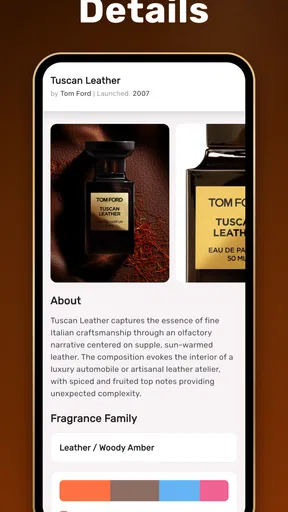
Perfume Lens is designed to help users explore perfumes through a visual and information-focused experience. Depending on the version available for your device, it may let you identify or browse fragrances, view perfume details, compare options, and discover recommendations. It is best understood as a companion for researching scents rather than a replacement for testing a fragrance in person, since skin chemistry can change how a perfume smells.
Can Perfume Lens identify a perfume from a bottle or image?
The app may use image recognition or visual search features to help match a perfume bottle with information in its database. Results can vary depending on the quality of the image, lighting, label visibility, and whether the specific fragrance is included. Users should check the suggested name, brand, notes, and product details carefully instead of assuming every scan is completely accurate.
Does Perfume Lens provide reliable perfume notes and recommendations?
Perfume Lens can be useful for discovering fragrance families, listed notes, product descriptions, and possible alternatives, but its information should be treated as guidance. Perfume databases may contain incomplete, user-submitted, or retailer-provided details, and recommendations are not guaranteed to match your preferences. If an ingredient, allergy, or purchase decision is important, verify the information with the official brand or seller.
Is Perfume Lens free to download, and are there in-app purchases?
The app may be available as a free download, but some features can depend on the current release, region, or subscription model. Advanced searches, expanded perfume information, personalized recommendations, or an ad-free experience may require payment. Before downloading or starting a trial, review the app-store listing for pricing, renewal terms, and the exact features included in any premium plan.
What privacy permissions does Perfume Lens require?
If Perfume Lens includes scanning or image-based search, it may request access to your camera and photo library. These permissions should be necessary only for features involving images, while notifications or account access may support saved perfumes and alerts. Review the privacy policy and your device settings before granting access, and deny permissions that are not needed for the way you plan to use the app.


